
Default
How Do Top Lab Furniture Manufacturers Support Research Facilities?
Top lab furniture manufacturers create value by deeply participating in the initial planning stage of the laboratory. The approach of getting involved 12 months before the project starts can increase the efficiency of space planning by 40%. Industry analysis in 2024 shows that research facilities adopting the collaborative design model have a 65% higher degree of workflow optimization than traditional procurement models, and researchers save an average of about 1.5 kilometers of round-trip travel distance per day. For instance, the Singapore Genome Institute, through the digital twin technology of manufacturers, simulated 3,000 experimental processes in a virtual environment. Eventually, it optimized the spacing between core functional areas to a minimum of 3 meters, increasing the efficiency of interdisciplinary collaboration by 25%. This kind of proactive intervention is like injecting intelligent genes into the building, making the spatial structure itself a catalyst for accelerating scientific research.
At the level of technology integration, leading manufacturers have pushed the modular concept to the extreme, providing standardized components with tolerances controlled within ±0.8 millimeters, enabling laboratories to complete the reorganization of functional areas within 48 hours. Data shows that laboratories with flexible architectures have their equipment update cycles shortened by 30% and their renovation costs reduced by 50% compared to traditional structures. The case of the European Molecular biology laboratory is particularly typical. Its adjustable-height fume hood system can accommodate researchers with heights ranging from 1.55 meters to 1.95 meters, raising the comfort score of equipment usage from 6.2 points to 9.1 points (out of 10) and reducing the rate of human operation errors by 18%. This dynamic adaptive design is like equipping scientific research with Transformers, always responding to the constantly changing experimental requirements.
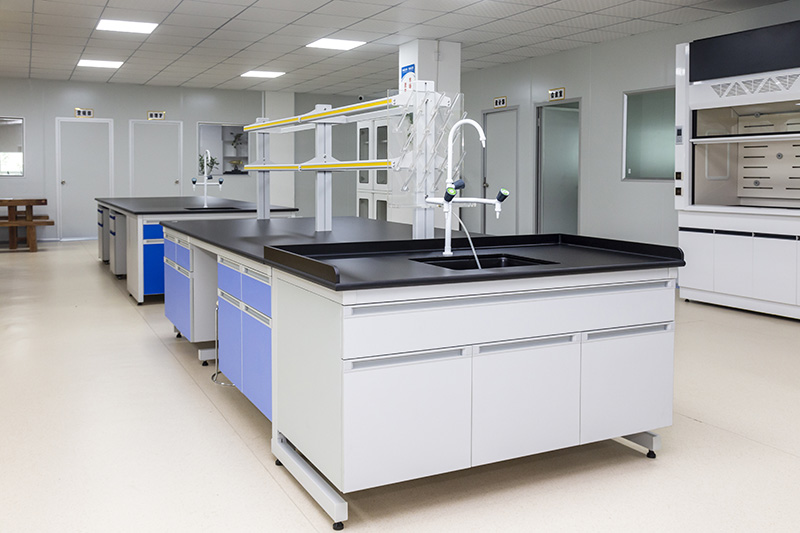 The sustainable development support system has built a differentiated advantage. The environmental protection solutions provided by top manufacturers can reduce laboratory energy consumption by 35%. According to the international sustainable laboratory certification standards, furniture systems containing 45% recycled metals can earn LEED bonus points, increasing the overall certification pass rate of the project by 20%. The 2023 report of the California Clean Energy Research Center shows that the heat recovery ventilation system it adopts saves $120,000 in cooling costs annually and reduces carbon dioxide emissions by 280 tons. This model of quantifying environmental benefits into financial indicators enables green investment to achieve a breakthrough of 150% return on investment within three years.
Supply chain resilience is reflected in crisis response capabilities. Manufacturers with global warehousing networks can complete the delivery of urgent orders within 21 days, keeping the risk of project delays below a 2% probability. When there was a 15% fluctuation in global logistics capacity in 2024, these enterprises still maintained a 98% on-time order delivery rate through digital dispatching systems. The Scripps Research Institute's anti-epidemic project has confirmed that its P3 laboratory took only 90 days from design to commissioning, which is 50% shorter than the standard cycle. This is attributed to the manufacturer's pre-reserved six-month inventory. This strategical-level coordination is like installing a stable anchor for scientific research facilities, ensuring that they remain on track even in the face of storms.
The full life cycle service system ultimately forms a value closed loop. The remote monitoring system provided by the manufacturer can collect equipment data every 15 minutes, achieving a fault early warning accuracy rate of 98%. Research shows that the overall equipment effectiveness (OEE) of research institutions that have signed five-year maintenance agreements remains above 95%, which is 20 percentage points higher than that of the self-maintenance model. As the technical director of the Max Planck Institute put it, "Excellent manufacturers are like extensions of research teams. They use engineering wisdom to eliminate our worries and enable scientists to focus on exploring unknown fields." This deep collaborative relationship is redefining the supporting paradigm of research infrastructure.
The sustainable development support system has built a differentiated advantage. The environmental protection solutions provided by top manufacturers can reduce laboratory energy consumption by 35%. According to the international sustainable laboratory certification standards, furniture systems containing 45% recycled metals can earn LEED bonus points, increasing the overall certification pass rate of the project by 20%. The 2023 report of the California Clean Energy Research Center shows that the heat recovery ventilation system it adopts saves $120,000 in cooling costs annually and reduces carbon dioxide emissions by 280 tons. This model of quantifying environmental benefits into financial indicators enables green investment to achieve a breakthrough of 150% return on investment within three years.
Supply chain resilience is reflected in crisis response capabilities. Manufacturers with global warehousing networks can complete the delivery of urgent orders within 21 days, keeping the risk of project delays below a 2% probability. When there was a 15% fluctuation in global logistics capacity in 2024, these enterprises still maintained a 98% on-time order delivery rate through digital dispatching systems. The Scripps Research Institute's anti-epidemic project has confirmed that its P3 laboratory took only 90 days from design to commissioning, which is 50% shorter than the standard cycle. This is attributed to the manufacturer's pre-reserved six-month inventory. This strategical-level coordination is like installing a stable anchor for scientific research facilities, ensuring that they remain on track even in the face of storms.
The full life cycle service system ultimately forms a value closed loop. The remote monitoring system provided by the manufacturer can collect equipment data every 15 minutes, achieving a fault early warning accuracy rate of 98%. Research shows that the overall equipment effectiveness (OEE) of research institutions that have signed five-year maintenance agreements remains above 95%, which is 20 percentage points higher than that of the self-maintenance model. As the technical director of the Max Planck Institute put it, "Excellent manufacturers are like extensions of research teams. They use engineering wisdom to eliminate our worries and enable scientists to focus on exploring unknown fields." This deep collaborative relationship is redefining the supporting paradigm of research infrastructure.
The sustainable development support system has built a differentiated advantage. The environmental protection solutions provided by top manufacturers can reduce laboratory energy consumption by 35%. According to the international sustainable laboratory certification standards, furniture systems containing 45% recycled metals can earn LEED bonus points, increasing the overall certification pass rate of the project by 20%. The 2023 report of the California Clean Energy Research Center shows that the heat recovery ventilation system it adopts saves $120,000 in cooling costs annually and reduces carbon dioxide emissions by 280 tons. This model of quantifying environmental benefits into financial indicators enables green investment to achieve a breakthrough of 150% return on investment within three years.
Supply chain resilience is reflected in crisis response capabilities. Manufacturers with global warehousing networks can complete the delivery of urgent orders within 21 days, keeping the risk of project delays below a 2% probability. When there was a 15% fluctuation in global logistics capacity in 2024, these enterprises still maintained a 98% on-time order delivery rate through digital dispatching systems. The Scripps Research Institute's anti-epidemic project has confirmed that its P3 laboratory took only 90 days from design to commissioning, which is 50% shorter than the standard cycle. This is attributed to the manufacturer's pre-reserved six-month inventory. This strategical-level coordination is like installing a stable anchor for scientific research facilities, ensuring that they remain on track even in the face of storms.
The full life cycle service system ultimately forms a value closed loop. The remote monitoring system provided by the manufacturer can collect equipment data every 15 minutes, achieving a fault early warning accuracy rate of 98%. Research shows that the overall equipment effectiveness (OEE) of research institutions that have signed five-year maintenance agreements remains above 95%, which is 20 percentage points higher than that of the self-maintenance model. As the technical director of the Max Planck Institute put it, "Excellent manufacturers are like extensions of research teams. They use engineering wisdom to eliminate our worries and enable scientists to focus on exploring unknown fields." This deep collaborative relationship is redefining the supporting paradigm of research infrastructure.