
Industrial Machinery & Manufacturing
How to ensure accuracy in aluminum cnc machining service?
The selection and calibration of CNC machine tools are the cornerstones of precision. Research shows that high-end five-axis CNC equipment with a repeat positioning accuracy of ≤±0.003mm can stably control the processing tolerance at IT7 level (equivalent to ±0.015mm). For instance, the Integrex series of machine tools from Mazak in Japan have reduced the thermal deformation error to 0.005mm/m·℃ through laser interferometer calibration. In 2023, Boeing's suppliers used such equipment to process the aluminum alloy bushings for the 767 landing gear, reducing the coaxiality deviation from 0.03mm to 0.008mm and lowering the scrap rate by 67%. Choose an aluminum cnc machining service provider with ISO 13485 or AS9100 certification to ensure that the equipment calibration frequency reaches twice a week and the position accuracy drift does not exceed 0.002mm.
Thermal management strategies directly affect dimensional stability. The local temperature of aluminum alloy during cutting can reach 250℃, resulting in a linear expansion of 0.1% (calculated based on an expansion coefficient of 23μm/m·℃). The production case of BMW motor housing shows that by using 7MPa high-pressure cutting fluid in combination with a low-temperature cooling system (-5℃), the temperature fluctuation of the workpiece can be suppressed within ±2℃, and the flatness deviation can be reduced by 75%. Well-known manufacturers generally apply temperature compensation algorithms. For instance, the Siemens 840D system can control the thermal deformation compensation error within 2.5μm. The aluminum cnc machining service process that implements closed-loop control usually stops the machine for temperature measurement after the first piece is processed, and corrects the cutting parameters by 20%-30% based on the data from the infrared thermal imager.
The precision tooling system eliminates the risk of clamping deformation. The vacuum suction cup fixture can maintain a negative pressure of 0.08MPa, ensuring that the clamping deformation of thin-walled parts (<1mm) is less than 5μm. The processing of joint replacement devices in the medical industry has proved that the radial runout accuracy (0.005mm) of the expansion core shaft positioning is three times higher than that of the three-jaw chuck. The zero-point positioning system deployed in the frontier factory has a repeat positioning accuracy of ±0.002mm, the assembly time is compressed to 90 seconds, and the clamping rigid load reaches 500N/mm, significantly reducing the surface waviness caused by resonance (the risk of Ra>0.6μm is reduced by 89%).
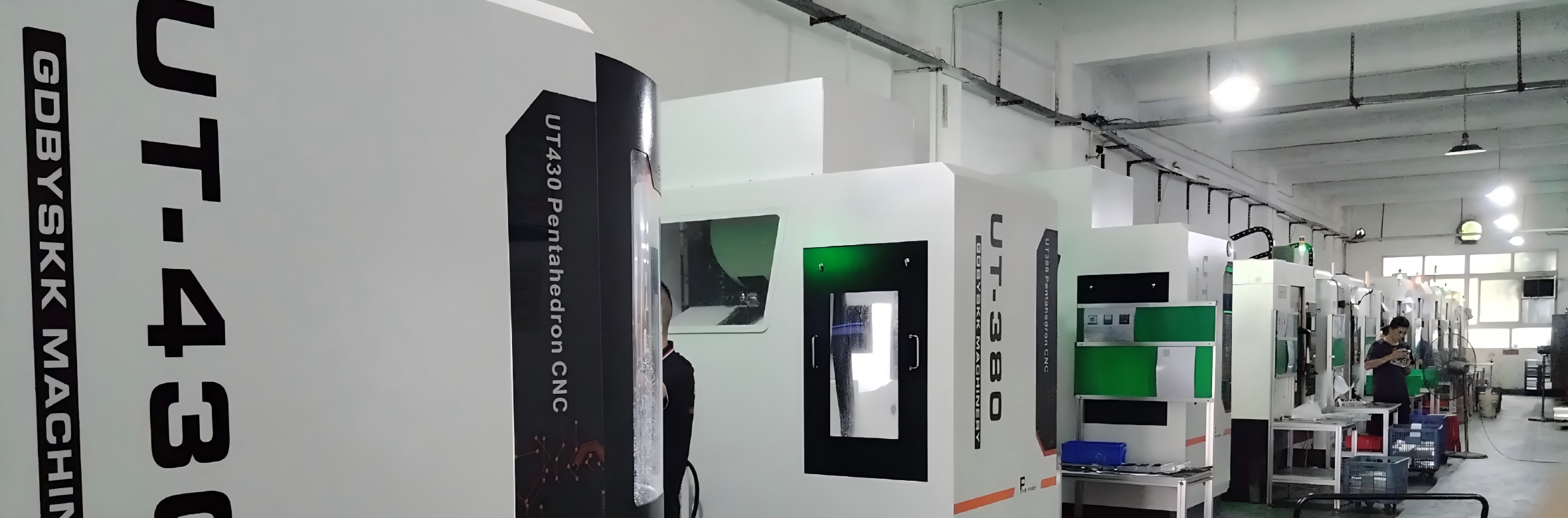 The quality control system builds multiple guarantees. The Zeiss CONTURA blue light scanner can achieve a point cloud resolution of 0.1μm, and in combination with statistical process control (SPC), it can stabilize the standard deviation σ of size fluctuations at 0.008mm. United Technologies Corporation has verified that implementing a strategy of on-site measurement and random inspection once every 15 pieces can increase the batch processing qualification rate to 99.4%. For aviation-grade Al7075 parts, three-level inspection must be carried out: full-size report of the first piece (over 100 measurement points), monitoring of random process capability index CPK≥1.67, and final fluorescent penetrant testing. Choose an aluminum cnc machining service provider with NADCAP certification, whose annual calibration error of the testing equipment is guaranteed to be within ±1%FS.
The tool management system avoids micron-level errors. Data from Sandvik Coromant shows that when diamond-coated tools are used to process 2000 series aluminum alloys, a cutting edge wear of 0.02mm can cause the surface roughness to deteriorate from Ra0.4 to Ra0.8. The acoustic emission tool monitoring system can predict the risk of chipping 98% in advance and narrow the fluctuation range of tool life from ±20% to ±7%. After a certain drone frame manufacturer implemented the intelligent tool compensation strategy, it automatically compensated 0.003-0.005mm for every 50 processed pieces, and the contour accuracy qualification rate increased by 16 percentage points.
Data-driven optimization achieves continuous improvement. By collecting over 500 processing parameters (such as cutting force, spindle power, and vibration spectrum), the machine learning model can predict potential dimensional deviations, with an accuracy rate of 92% for early warning three hours in advance. SpaceX suppliers have applied digital twin technology to compress the processing iteration cycle of fuel valve bodies from 72 hours to 8 hours, and the qualification rate of the tolerance zone for key hole diameters Φ25H7 has risen from 88.7% to 99.2%. aluminum cnc machining service providers that adopt the IoT platform can usually offer real-time precision dashboards, and the achievement rate of the process capability index CPK≥1.33 has increased by more than 60%.
The risk control process is standardized to address sudden deviations. When machining deep holes (depth >10D), the straightness deviation caused by tool deflection may reach 0.05mm/100mm. The standardized response plan includes: the feed rate is reduced in three stages (2000/1500/800 mm/min), chip removal takes 0.5 seconds for every 15mm depth, and compressed air-assisted chip removal (flow rate 6m³/min). Tool manufacturer Kennametal confirmed that this strategy reduced the deep hole deflection Angle from 0.3° to 0.08°. Suppliers who strictly implement FMEA analysis can control the response time for processing anomalies within 22 minutes, and the success rate of dimensional correction reaches 95%.
The quality control system builds multiple guarantees. The Zeiss CONTURA blue light scanner can achieve a point cloud resolution of 0.1μm, and in combination with statistical process control (SPC), it can stabilize the standard deviation σ of size fluctuations at 0.008mm. United Technologies Corporation has verified that implementing a strategy of on-site measurement and random inspection once every 15 pieces can increase the batch processing qualification rate to 99.4%. For aviation-grade Al7075 parts, three-level inspection must be carried out: full-size report of the first piece (over 100 measurement points), monitoring of random process capability index CPK≥1.67, and final fluorescent penetrant testing. Choose an aluminum cnc machining service provider with NADCAP certification, whose annual calibration error of the testing equipment is guaranteed to be within ±1%FS.
The tool management system avoids micron-level errors. Data from Sandvik Coromant shows that when diamond-coated tools are used to process 2000 series aluminum alloys, a cutting edge wear of 0.02mm can cause the surface roughness to deteriorate from Ra0.4 to Ra0.8. The acoustic emission tool monitoring system can predict the risk of chipping 98% in advance and narrow the fluctuation range of tool life from ±20% to ±7%. After a certain drone frame manufacturer implemented the intelligent tool compensation strategy, it automatically compensated 0.003-0.005mm for every 50 processed pieces, and the contour accuracy qualification rate increased by 16 percentage points.
Data-driven optimization achieves continuous improvement. By collecting over 500 processing parameters (such as cutting force, spindle power, and vibration spectrum), the machine learning model can predict potential dimensional deviations, with an accuracy rate of 92% for early warning three hours in advance. SpaceX suppliers have applied digital twin technology to compress the processing iteration cycle of fuel valve bodies from 72 hours to 8 hours, and the qualification rate of the tolerance zone for key hole diameters Φ25H7 has risen from 88.7% to 99.2%. aluminum cnc machining service providers that adopt the IoT platform can usually offer real-time precision dashboards, and the achievement rate of the process capability index CPK≥1.33 has increased by more than 60%.
The risk control process is standardized to address sudden deviations. When machining deep holes (depth >10D), the straightness deviation caused by tool deflection may reach 0.05mm/100mm. The standardized response plan includes: the feed rate is reduced in three stages (2000/1500/800 mm/min), chip removal takes 0.5 seconds for every 15mm depth, and compressed air-assisted chip removal (flow rate 6m³/min). Tool manufacturer Kennametal confirmed that this strategy reduced the deep hole deflection Angle from 0.3° to 0.08°. Suppliers who strictly implement FMEA analysis can control the response time for processing anomalies within 22 minutes, and the success rate of dimensional correction reaches 95%.
The quality control system builds multiple guarantees. The Zeiss CONTURA blue light scanner can achieve a point cloud resolution of 0.1μm, and in combination with statistical process control (SPC), it can stabilize the standard deviation σ of size fluctuations at 0.008mm. United Technologies Corporation has verified that implementing a strategy of on-site measurement and random inspection once every 15 pieces can increase the batch processing qualification rate to 99.4%. For aviation-grade Al7075 parts, three-level inspection must be carried out: full-size report of the first piece (over 100 measurement points), monitoring of random process capability index CPK≥1.67, and final fluorescent penetrant testing. Choose an aluminum cnc machining service provider with NADCAP certification, whose annual calibration error of the testing equipment is guaranteed to be within ±1%FS.
The tool management system avoids micron-level errors. Data from Sandvik Coromant shows that when diamond-coated tools are used to process 2000 series aluminum alloys, a cutting edge wear of 0.02mm can cause the surface roughness to deteriorate from Ra0.4 to Ra0.8. The acoustic emission tool monitoring system can predict the risk of chipping 98% in advance and narrow the fluctuation range of tool life from ±20% to ±7%. After a certain drone frame manufacturer implemented the intelligent tool compensation strategy, it automatically compensated 0.003-0.005mm for every 50 processed pieces, and the contour accuracy qualification rate increased by 16 percentage points.
Data-driven optimization achieves continuous improvement. By collecting over 500 processing parameters (such as cutting force, spindle power, and vibration spectrum), the machine learning model can predict potential dimensional deviations, with an accuracy rate of 92% for early warning three hours in advance. SpaceX suppliers have applied digital twin technology to compress the processing iteration cycle of fuel valve bodies from 72 hours to 8 hours, and the qualification rate of the tolerance zone for key hole diameters Φ25H7 has risen from 88.7% to 99.2%. aluminum cnc machining service providers that adopt the IoT platform can usually offer real-time precision dashboards, and the achievement rate of the process capability index CPK≥1.33 has increased by more than 60%.
The risk control process is standardized to address sudden deviations. When machining deep holes (depth >10D), the straightness deviation caused by tool deflection may reach 0.05mm/100mm. The standardized response plan includes: the feed rate is reduced in three stages (2000/1500/800 mm/min), chip removal takes 0.5 seconds for every 15mm depth, and compressed air-assisted chip removal (flow rate 6m³/min). Tool manufacturer Kennametal confirmed that this strategy reduced the deep hole deflection Angle from 0.3° to 0.08°. Suppliers who strictly implement FMEA analysis can control the response time for processing anomalies within 22 minutes, and the success rate of dimensional correction reaches 95%.