
Default
How to select shopping bags that match your brand colors and style?
When choosing shopping bags for a brand, color accuracy is the primary step in shaping visual identity. Studies show that shopping bags that precisely match brand standard colors (such as Pantone Color Card PMS) can increase brand recognition by up to 30%. For instance, the global coffee chain brand Starbucks has applied its signature green color (PMS 3425) to shopping bags. Through professional digital proofing technology, it has controlled the color difference within the industry high standard of ΔE≤1.5, ensuring visual uniformity in over 30,000 stores worldwide. A market research in 2023 shows that when the matching degree between packaging color and brand color exceeds 95%, consumers' brand recall rate in the retail environment can increase by 25%. This means that investing in high-precision color reproduction, although it may increase printing costs by approximately 15%, can bring brand value growth of more than three times the initial investment.
The choice of material directly affects the color presentation effect and style texture. For instance, when screen printing technology is applied to pure cotton canvas shopping bags, the ink coverage thickness can reach 20 microns, and the color saturation is 40% higher than that of ordinary plastic bags, but the cost will increase by 20% accordingly. On the contrary, if a simple and artistic style is pursued, unbleached original pulp paper bags combined with flexographic printing can make the brand logo present a unique matte texture, and the production cost can be reduced by 30%. However, the color durability will be affected by the environmental humidity. In an environment with humidity exceeding 70%, the color shedding rate may reach 5% per month. Luxury brands like Hermes are well aware of this. Their dedicated shopping bags are made of special paper base and the surface is treated with a coating, which ensures that the retention rate of the gold embossing remains above 98% after 1,000 friction tests.
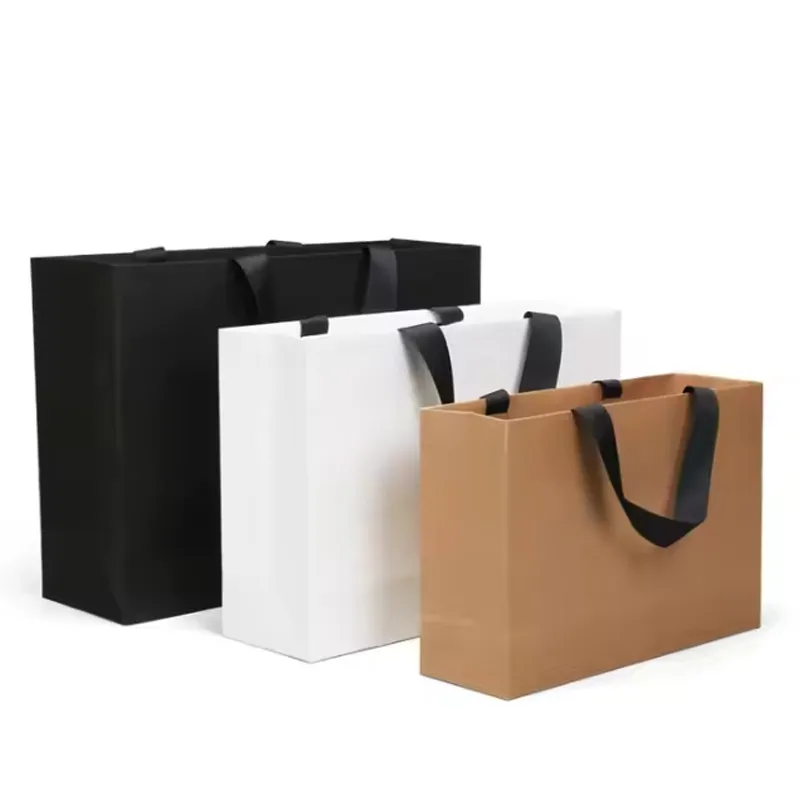 The innovation ability of printing technology is the key to achieving a unique style. Thermal transfer technology can enhance the fidelity of complex patterns to a high resolution of 1200 DPI, with a pattern detail error of less than 0.1 millimeters, but the production cycle needs to be extended by 5 to 7 days. Although the emerging digital direct printing technology has compressed the proofing time from 72 hours to 4 hours, making it suitable for small-batch and fast-response orders, and its single-color printing speed can reach 60 meters per minute, the ink cost is 25% higher than that of the traditional method. In 2024, a trend-setting case was the limited edition shopping bag launched by the sports brand Nike, which applied 3D raster printing technology, causing the patterns to change dynamically with the viewing Angle. Although the cost of each bag increased by $2, it received over 5 million natural exposures on social media, with an advertising equivalent value of over $1 million.
From the perspective of supply chain management, achieving consistency in brand style requires quantitative indicators for full-process control. It is recommended that brand owners clearly specify the tolerance range of color standards (such as ΔE≤3), the deviation of material weight (such as ±5 grams per square meter), and the minimum order quantity (MOQ) when cooperating with manufacturers. Generally, more than 5,000 pieces are needed to effectively spread out the cost and keep the unit price within a 10% fluctuation range of the budget. Data analysis shows that implementing a strict quality control process, although it will increase the initial sampling inspection cost by 5% of the total cost, can reduce the non-conformity rate of mass production from 8% to below 1%, avoiding potential losses of up to 20%. Ultimately, a shopping bag that highly aligns with the brand's style is not merely a container for goods but also a highly cost-effective mobile advertising campaign. Its average daily exposure frequency may exceed 10 times, and the payback period can be shortened to three months.
The innovation ability of printing technology is the key to achieving a unique style. Thermal transfer technology can enhance the fidelity of complex patterns to a high resolution of 1200 DPI, with a pattern detail error of less than 0.1 millimeters, but the production cycle needs to be extended by 5 to 7 days. Although the emerging digital direct printing technology has compressed the proofing time from 72 hours to 4 hours, making it suitable for small-batch and fast-response orders, and its single-color printing speed can reach 60 meters per minute, the ink cost is 25% higher than that of the traditional method. In 2024, a trend-setting case was the limited edition shopping bag launched by the sports brand Nike, which applied 3D raster printing technology, causing the patterns to change dynamically with the viewing Angle. Although the cost of each bag increased by $2, it received over 5 million natural exposures on social media, with an advertising equivalent value of over $1 million.
From the perspective of supply chain management, achieving consistency in brand style requires quantitative indicators for full-process control. It is recommended that brand owners clearly specify the tolerance range of color standards (such as ΔE≤3), the deviation of material weight (such as ±5 grams per square meter), and the minimum order quantity (MOQ) when cooperating with manufacturers. Generally, more than 5,000 pieces are needed to effectively spread out the cost and keep the unit price within a 10% fluctuation range of the budget. Data analysis shows that implementing a strict quality control process, although it will increase the initial sampling inspection cost by 5% of the total cost, can reduce the non-conformity rate of mass production from 8% to below 1%, avoiding potential losses of up to 20%. Ultimately, a shopping bag that highly aligns with the brand's style is not merely a container for goods but also a highly cost-effective mobile advertising campaign. Its average daily exposure frequency may exceed 10 times, and the payback period can be shortened to three months.
The innovation ability of printing technology is the key to achieving a unique style. Thermal transfer technology can enhance the fidelity of complex patterns to a high resolution of 1200 DPI, with a pattern detail error of less than 0.1 millimeters, but the production cycle needs to be extended by 5 to 7 days. Although the emerging digital direct printing technology has compressed the proofing time from 72 hours to 4 hours, making it suitable for small-batch and fast-response orders, and its single-color printing speed can reach 60 meters per minute, the ink cost is 25% higher than that of the traditional method. In 2024, a trend-setting case was the limited edition shopping bag launched by the sports brand Nike, which applied 3D raster printing technology, causing the patterns to change dynamically with the viewing Angle. Although the cost of each bag increased by $2, it received over 5 million natural exposures on social media, with an advertising equivalent value of over $1 million.
From the perspective of supply chain management, achieving consistency in brand style requires quantitative indicators for full-process control. It is recommended that brand owners clearly specify the tolerance range of color standards (such as ΔE≤3), the deviation of material weight (such as ±5 grams per square meter), and the minimum order quantity (MOQ) when cooperating with manufacturers. Generally, more than 5,000 pieces are needed to effectively spread out the cost and keep the unit price within a 10% fluctuation range of the budget. Data analysis shows that implementing a strict quality control process, although it will increase the initial sampling inspection cost by 5% of the total cost, can reduce the non-conformity rate of mass production from 8% to below 1%, avoiding potential losses of up to 20%. Ultimately, a shopping bag that highly aligns with the brand's style is not merely a container for goods but also a highly cost-effective mobile advertising campaign. Its average daily exposure frequency may exceed 10 times, and the payback period can be shortened to three months.